There is nothing quite as frustrating as having to cut a great run short because your calves feel like they are tightening in a vise. You’ve stretched, you’ve foam rolled, and you’ve hydrated, but every time you hit your stride, that familiar burning ache creeps back in.
If you are dealing with chronic calf pain or tightness while running, the problem might not be your muscles at all. The real culprit is often found further down: in the way your foot hits the ground, and the shoes you wear to do it.
Let’s break down how your running mechanics might be overloading your lower legs—and exactly how to fix it.
Forefoot vs. Heel Striking: What’s the Difference?
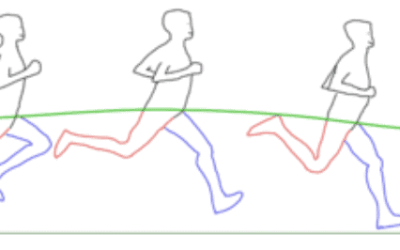
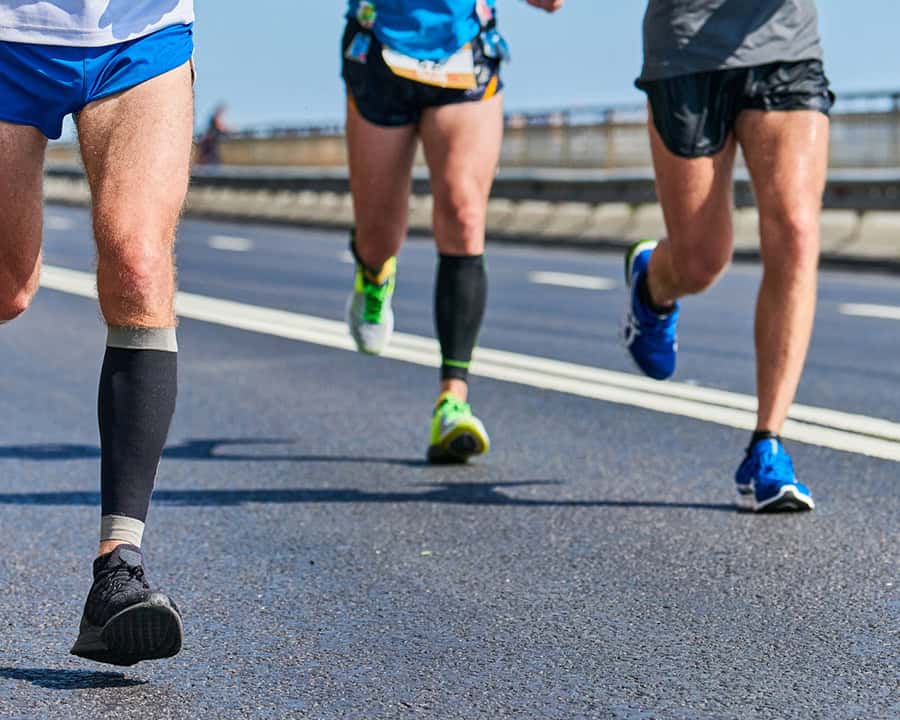
Every runner has a specific “foot strike,” which simply means the part of your foot that makes contact with the ground first. While there are a few variations, most runners fall into one of two camps:
-
Heel Striking: You land with your heel first, rolling forward through the midfoot and pushing off your toes. This is the most common running style. It relies heavily on your skeletal structure and tends to send the impact forces up into your knees and hips.
-
Forefoot Striking: You land on the balls of your feet (the front half) and your heel may lightly touch down afterward, or sometimes not at all. This style relies heavily on your soft tissues—specifically your muscles and tendons—to absorb the shock of each step.
Why Forefoot Running Overloads the Calves and Achilles
While forefoot striking is often praised for being a “natural” or “faster” way to run, it comes with a massive demand on your lower legs.
When you land on the ball of your foot, your calf muscles (the gastrocnemius and soleus) and your Achilles tendon act as the primary shock absorbers for your entire body weight. If those tissues are not conditioned to handle that repetitive, heavy load—or if you recently switched to a forefoot strike without a gradual transition—they quickly become overworked. This leads to micro-tears, inflammation, and that stubborn, burning calf pain that stops you in your tracks.
Are your calves holding you back from your running goals? You don’t have to push through the pain or sideline yourself for the season. Our physical therapists can identify exactly what is causing your discomfort.
 The Role of Your Shoes
 The Role of Your Shoes
Sometimes, you might be a forefoot striker without even realizing it—and your shoes might be the reason why.
If you’ve recently switched to “zero-drop” shoes, minimalist footwear, or if your current running shoes are simply worn out and lacking heel support, your foot is forced into a flatter position. This automatically shifts the burden of impact absorption directly onto your calves and Achilles.
How Gait Analysis and Custom Orthotics Can Fix It
You don’t have to completely abandon your running style, but you do need to give your body the right support to handle the load. That is where professional intervention changes the game.
-
Professional Gait Analysis: We don’t just look at where it hurts; we look at how you move. By analyzing your running mechanics on a treadmill, we can pinpoint if an aggressive forefoot strike, overpronation, or a muscle imbalance is the root cause of your calf pain.
-
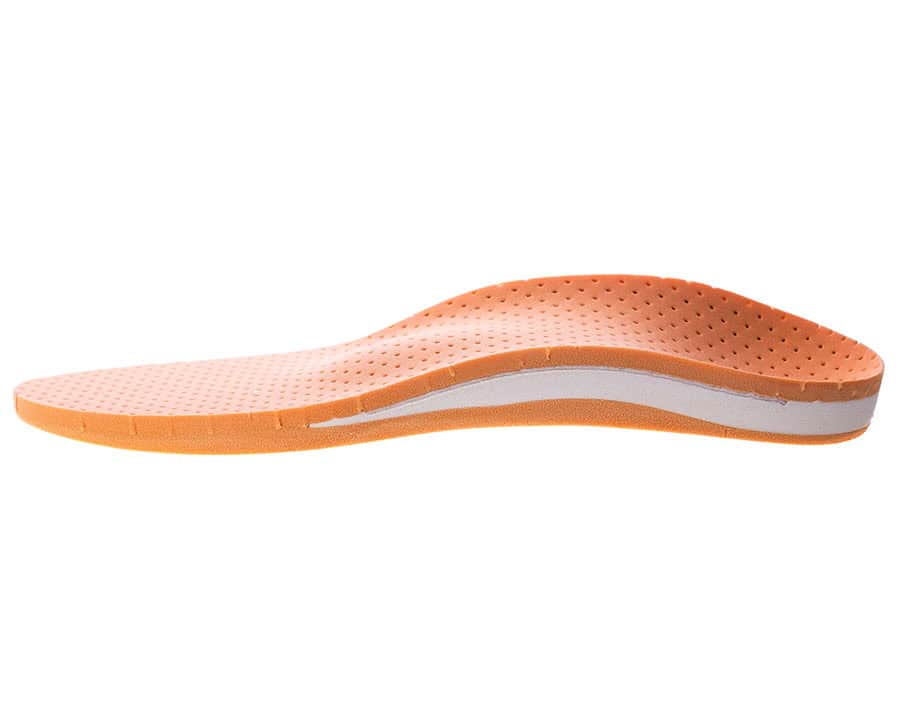
Custom Orthotics & Insoles: If your foot isn’t naturally absorbing shock well, custom orthotics can bridge the gap. Unlike flimsy drugstore inserts, custom orthotics are molded to your exact foot structure. They help distribute the impact of each stride more evenly across your foot, taking the excessive, localized strain off your calves and Achilles tendon.
-
Targeted Strengthening: Once the load is balanced, we help you build the specific calf and ankle strength required to run efficiently and pain-free.
Get Back to Running Pain-Free in NE Minneapolis
Whether you are logging miles around Audubon Park or training for a marathon, running shouldn’t equal pain. If calf tightness is ruining your routine, it’s time to look at the mechanics behind the miles.
Ready to get to the bottom of your running injuries?