You push your body hard—whether that means logging miles on the trail, lifting heavy in the gym, or just keeping up with a demanding, active lifestyle. Muscle soreness is part of the territory. But when standard soreness turns into stubborn, chronic muscle pain that stretching and foam rolling can’t touch, it’s time to bring in the professional tools.
If you are looking for advanced recovery and pain relief, you have likely heard of Cupping and Dry Needling. Both are highly effective, but they do very different things.
So, which one does your body actually need right now? Here is a side-by-side comparison to help you decide.
Dry Needling: Deep, Precision Trigger Point Therapy
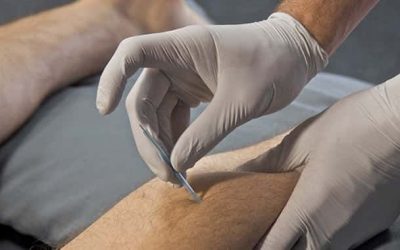
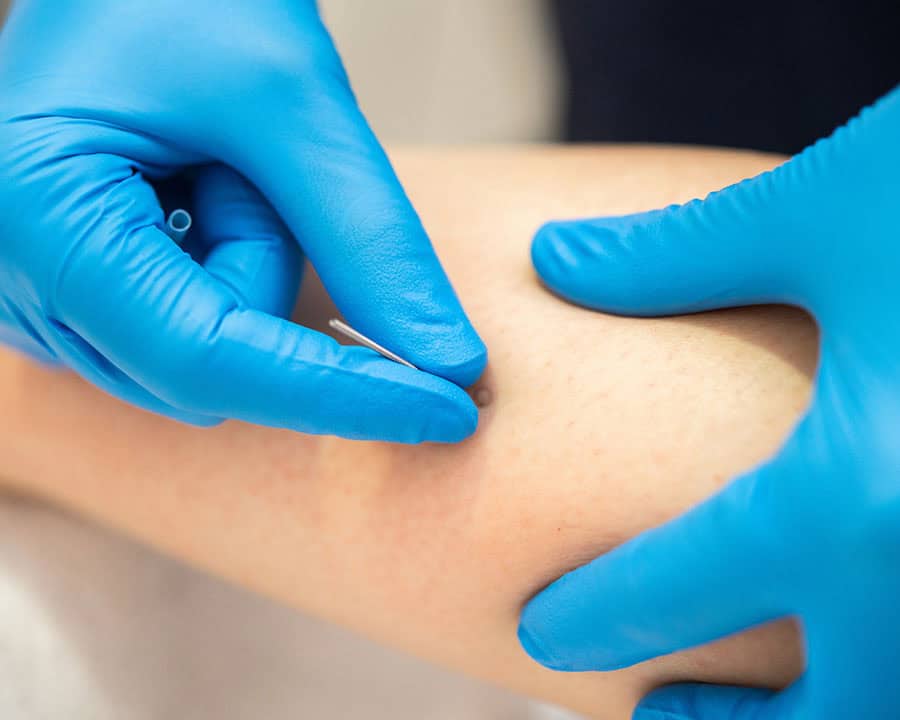
If cupping is a broad paintbrush, dry needling is a laser beam. It is a “pushing” mechanism designed to reach depths that hands and cups simply cannot.
-
How it Works: A physical therapist inserts a micro-thin, sterile needle directly into a myofascial trigger point (a tightly contracted knot within the muscle). This creates a localized “twitch” response, which instantly resets the muscle’s neurological signal, forces the knot to release, and restores normal movement.
-
Best For: Deep, highly specific, and stubborn pain.
-
The Perfect Scenario: If you have a deeply knotted rotator cuff, a sharp pain radiating from your glute (sciatica-like symptoms), or stiffness around an arthritic joint, dry needling gets straight to the root of the dysfunction.
 Cupping Therapy: Broad, Superficial Fascia Release
 Cupping Therapy: Broad, Superficial Fascia Release
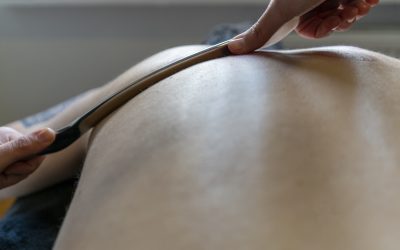
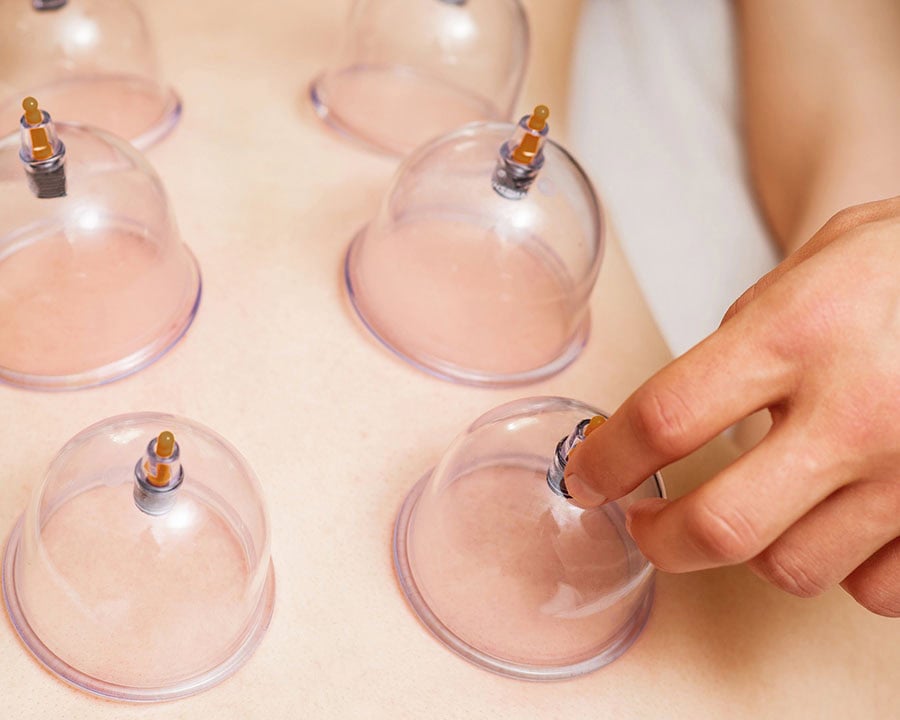
Think of cupping as a “pulling” mechanism. Instead of pressing down on a tight muscle like a traditional massage, cupping uses suction to decompress the tissue, pulling the skin and fascia upwards.
-
How it Works: By creating negative pressure, cupping draws fresh, oxygenated blood into the area while lifting the fascia (the connective tissue covering your muscles) to relieve tension.
-
Best For: Broad areas of superficial tension.
-
The Perfect Scenario: If you have a chronically tight, stiff lower back from deadlifts, or widespread tension across your upper back and lats from sitting at a desk, cupping provides incredible, sweeping relief. It excels at loosening large zones of restricted tissue.
Curious about the science behind that muscle “twitch”? If you have deep, stubborn knots that just won’t let go, dive into the details by reading our full guide:
The Verdict: Which Do You Need?
The truth is, these therapies aren’t rivals—they are teammates. In many cases, we use them together. We might use cupping to lift and loosen the broad fascia across your shoulder blade, and then use dry needling to target the deep, localized knot in your rotator cuff.
To see the clinical backing of how these specialized manual therapies effectively treat musculoskeletal conditions, you can read the latest research from the
Stop Guessing and Start Healing
You don’t need to self-diagnose your muscle pain. Our Doctors of Physical Therapy are experts at evaluating your movement and building a recovery plan that targets the exact cause of your discomfort.
Ready to finally release that chronic tension?

- Dry Needling vs. Cupping: Which is Best for Your Chronic Muscle Pain? - April 1, 2026
- A Guide to Safe Postpartum Recovery and Rehabilitation in the Twin Cities - December 4, 2025