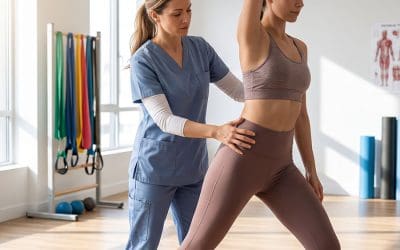

You treat your body like an athlete. You prioritize your warm-ups, you track your lifts, and you listen to your coaches. But what happens when the pain you feel during a deep squat follows you home? Or when that nagging hip tightness starts to interfere with your intimacy?
For many active women in the Twin Cities, there is a surprising connection between the gym and the bedroom. That connection is your pelvic floor.
At PRO Therapy, serving Northeast Minneapolis and Coon Rapids, we often see clients who treat their back pain or hip tightness for months without relief, never realizing the root cause lies in their pelvic floor. Understanding this link is the key to unlocking better performance in your workouts and a pain-free life at home.
The Hidden Link: Hip Pain, Back Pain, and Your Pelvic Floor
It is easy to compartmentalize our bodies. We think of “back pain” as a spine issue and “pelvic pain” as a reproductive issue. But anatomically, they are inseparable.
Your pelvic floor muscles attach directly to your tailbone (coccyx) and sit bones (ischial tuberosities). They work in tandem with your deep hip rotators and your lower back muscles to stabilize your core.
When you are lifting heavy or running high mileage, your body demands stability. If your core is weak or your alignment is off, your pelvic floor might overcompensate by “gripping” or staying in a constant state of contraction. This is often called a hypertonic pelvic floor.
How does this affect your workout? A hypertonic (tight) pelvic floor cannot lengthen or absorb shock. This often manifests as:
- Chronic Hip Tightness: No amount of foam rolling seems to release your hips because the tension is coming from inside the pelvis.
- Low Back Pain: The pelvic floor pulls on the tailbone, causing deep, aching back pain that worsens after exercise.
- “Glute Amnesia”: Your glutes struggle to fire correctly because the deep hip rotators are overworked.
According to the National Institutes of Health, chronic pelvic pain is frequently comorbid with lower back pain, suggesting that treating one without the other often leads to incomplete recovery.
 When Gym Stress Follows You Home
 When Gym Stress Follows You Home
The same muscles that stabilize you during a deadlift are also responsible for sexual function. If your pelvic floor is exhausted from “gripping” all day to protect your back or hips, it cannot relax when you need it to.
This is why many active women experience pain during intercourse (dyspareunia). It isn’t necessarily a hormonal issue or a “mood” issue; it is often a mechanical one. The muscles are simply too tight to allow for pain-free intimacy.
If you have wondered why sex has become painful or uncomfortable, you are not alone. We discuss this and other common concerns in our recent article, Top Questions Women Ask About Pelvic Pain (But Are Too Afraid to Ask). [Note: Insert link to your previous blog post here]
Signs Your Pelvic Floor is Impacting Your Lifestyle
How do you know if your hip pain or gym struggles are actually a pelvic health issue? Look for these overlapping symptoms:
- Pain with deep squats: You feel a pinching in the front of the hip or deep pelvic pain at the bottom of a squat.
- Tailbone pain: Sitting for long periods after a workout hurts your tailbone.
- Urgency: You feel like you have to pee constantly, even when your bladder isn’t full (a sign of tight muscles irritating the bladder).
- Pain with tampon insertion or intimacy: As mentioned, this is a hallmark sign of high-tone pelvic floor dysfunction.
The International Pelvic Pain Society highlights that musculoskeletal dysfunction is a primary contributor to pelvic pain, emphasizing the need for a physical therapy approach to treatment.
Stop Guessing and Start Healing
If you are dealing with stubborn hip pain, back pain, or discomfort that affects your intimate life, standard stretching likely won’t fix it. You need a strategy that addresses the pelvic floor connection.
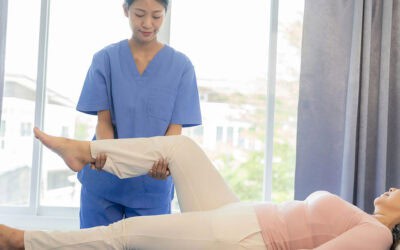
At PRO Therapy, our Pelvic Health Physical Therapy goes beyond generic exercises. We assess your hip mobility, your breathing patterns, and your core coordination to identify exactly where the dysfunction starts.
We help you:
- Down-train and Relax: Learn to release the “grip” in your pelvic floor to relieve hip and back tension.
- Retrain Movement: Fix your squat or running form to stop overworking your pelvic floor.
- Restore Function: Get back to lifting heavy and living pain-free—in and out of the bedroom.
Not Sure If This Is You?
We understand that pelvic health can feel complicated, and you might not be sure if physical therapy is the right answer for your specific symptoms. That is why we offer a no-pressure option to get your questions answered.
Apply for a Free Discovery Visit at our Northeast Minneapolis or Coon Rapids clinics. Sit down with a specialist, tell us your story, and find out if we are the right partner for your health journey.

- 5 Signs Your Pelvic Floor May Need PT - October 15, 2026
- When Kegels Aren’t Working – Pelvic Floor Therapy for Active Women - October 4, 2026
- Can Shockwave Therapy Fix Chronic Back Pain? - September 28, 2026